
Can Your Greenwich Backyard Putting Green Withstand Winter?
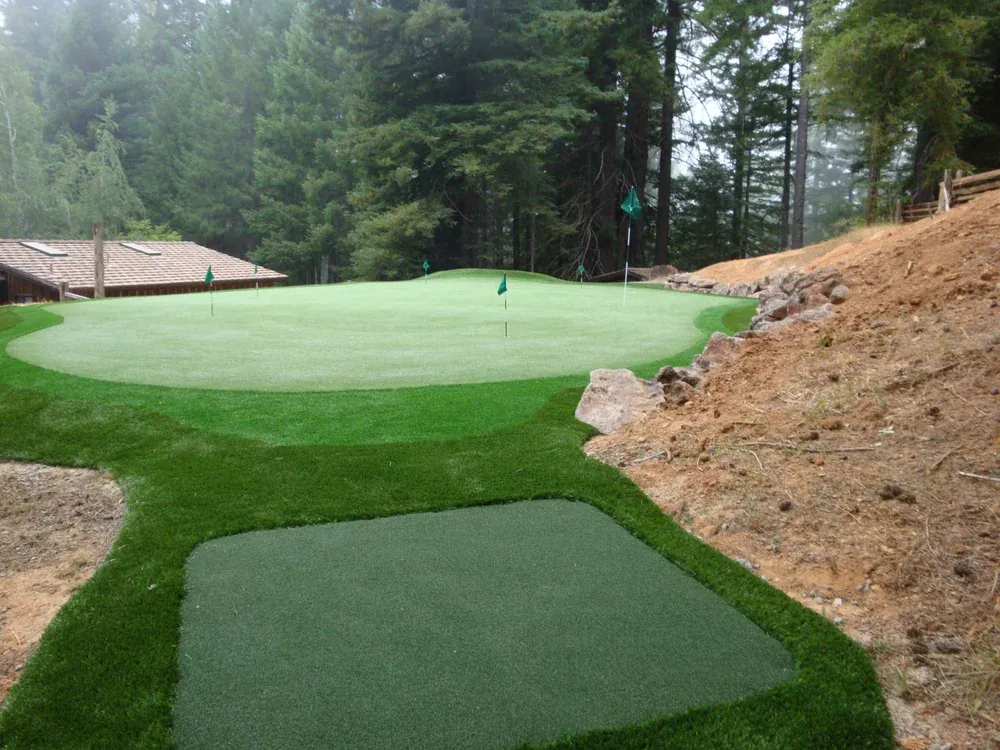
An early hard frost typically signals the end of golf season. The season ends, the clubs get stored away, and your short game grows rusty by spring. A Greenwich backyard putting green fixes that. But if you live somewhere with real winters, you've likely wondered whether an outdoor putting green in Greenwich can endure months of snow, ice, and freezing nights. The short answer: a well-built synthetic turf putting green handles winter far better than natural grass. Here's what happens to it when temperatures fall, and how to maintain it until the weather warms.
NATURAL GRASS TURNS DORMANT. SYNTHETIC TURF DOESN'T
A natural green browns and goes brown in winter and requires weeks of rehabilitation before it performs properly again. Winter damage, snow mold, and bare patches are part of the deal. Synthetic turf eliminates all of that. There's no growing season, so there's nothing to go dormant. When the snow melts, the green looks and rolls the way it did in October. No reseeding, no fertilizer, and no waiting for it to fill in.
FREEZE-THAW CYCLES START BELOW THE SURFACE
The real winter challenge for any outdoor putting green happens under the turf. When water pools in the base and freezes, it expands. Allow that happen enough times, and the ground can heave, creating bumps and dips that disrupt your roll. That's why drainage is so important. A correctly built green sits on a compacted base with turf that lets water drain straight through. Snowmelt drains down and away instead of puddling and refreezing, so the contours and breaks you designed stay where they belong. A green installed over a weak base or poor soil will show the problems by spring. It's one of the most important reasons to hire an experienced installer from the beginning. [link to SWG installation process page]
WHAT TO DO (AND NOT DO) WHILE CLEARING SNOW
When you want to squeeze in some putting during a dry window, or you just need the yard cleared, a little attention goes a long way.
Do:
- Use a plastic shovel or a soft-bristled push broom.
- Allow a thin layer of snow on the surface and let the sun handle the rest.
- Try a leaf blower on light, dry snow. .
- Sweep the green once the snow clears to stand the fibers back up and redistribute any shifted infill.
Don't:
- Reach for a metal shovel, ice chopper, or any tool with a sharp edge.
- Scatter rock salt or chemical ice melt across the turf.
- Shovel snow from the walkway or driveway onto the green.
- Operate a snow blower low enough to skim the surface.
SPRING RESUMES RIGHT WHERE YOU LEFT OFF
Once the weather clears, most greens require little more than a fast cleanup. Clear away leaves and debris, brush the turf, and look for spots where infill has shifted. Then grab your putter. Compare that to a natural green, which can require weeks of upkeep before it's ready for play. A synthetic green gives you those weeks back.
PLAN YOUR BACKYARD PUTTING GREEN BEFORE THE THAW
Winter is a great time to design a backyard putting green. Planning, site review, and scheduling can all happen during the off-season, so your install can begin early instead of in the middle of the spring rush. Southwest Greens designs and installs outdoor putting greens from the base up, with drainage specified for the climate where you live. Get in touch with your local Southwest Greens team or call us at (203) 879-4201 to start designing yours.